
 Facebook
 X
 Pinterest
 Copy Link
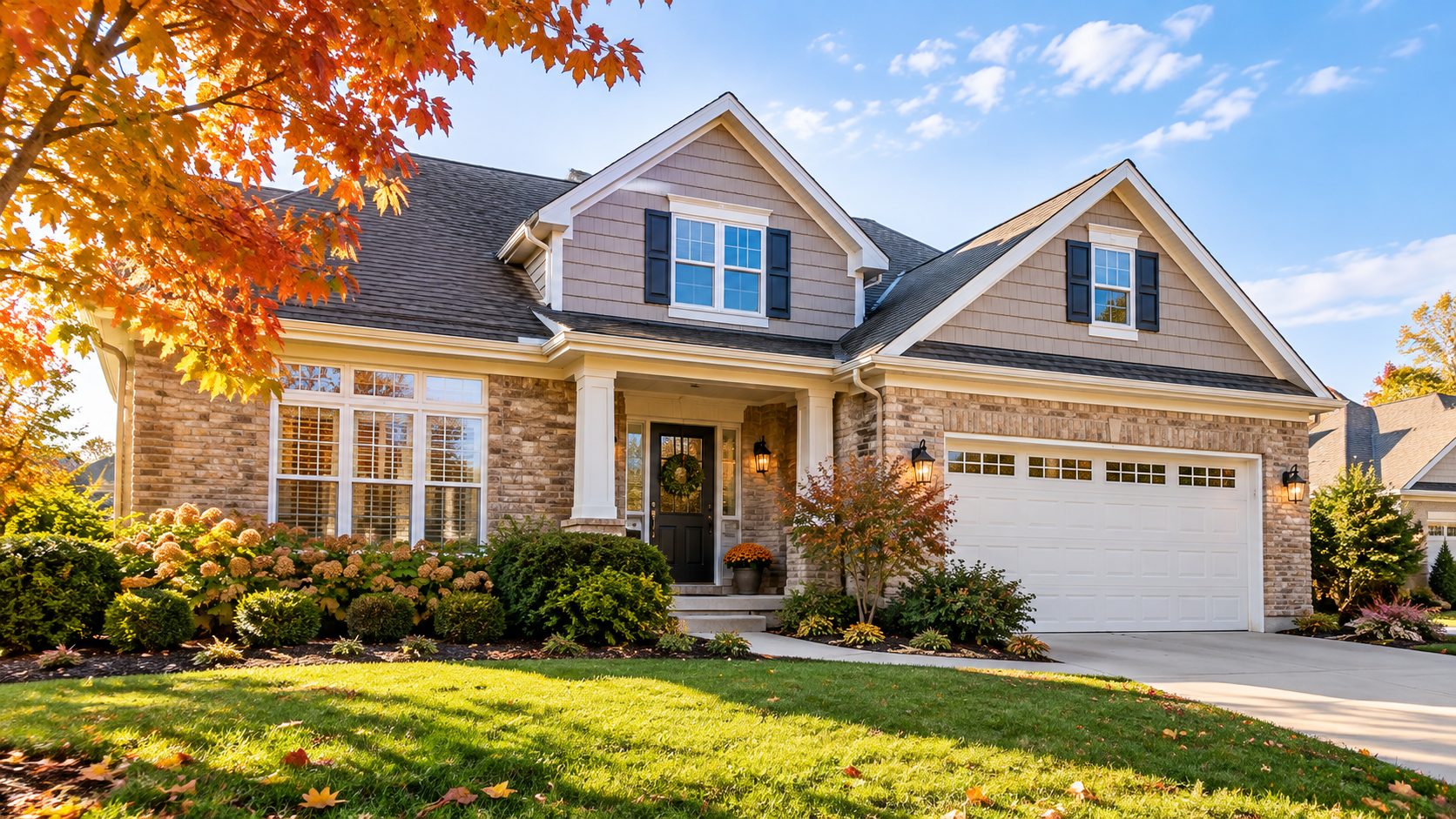
If you’ve ever looked up your home’s value on Zillow or another real estate website, you’ve probably wondered how accurate that number really is.
Online estimates can be a helpful starting point, but they don’t always tell the full story. Two homes in the same neighborhood, with similar square footage and the same number of bedrooms, can have noticeably different market values.
That’s especially important in communities like New Lenox, Frankfort, Mokena, and the surrounding southwest suburbs, where homes can vary considerably in age, layout, lot size, and features, sometimes within the same subdivision.
So what actually determines what your home is worth?
Understanding the factors behind a home’s value can help you make more informed decisions, whether you’re considering selling or simply keeping track of your investment.
1. Recent Comparable Home Sales
One of the most important factors in determining a home’s market value is what similar properties have recently sold for.
Real estate professionals refer to these properties as comparable sales, or comps. The National Association of Realtors offers a helpful consumer guide to pricing your home that explains how comparable sales and other factors influence pricing decisions.
Ideally, comparable homes share similar characteristics, including:
- Location and neighborhood
- Square footage and floor plan
- Number of bedrooms and bathrooms
- Age and architectural style
- Basement, garage, and other features
- Overall condition and improvements
For example, when evaluating a home in New Lenox, a recent sale within the same subdivision may provide a stronger comparison than a property several miles away.
However, proximity alone doesn’t make a property a good comparable.
A home built in the 1990s with two stories and a full basement may not be directly comparable to a newer ranch with a different floor plan, even if both have similar square footage.
In communities like Frankfort and Mokena, where housing styles, subdivision characteristics, and lot sizes can vary, choosing the right comparable properties is especially important.
When recent comparable sales are limited, it may be necessary to examine older sales or properties in nearby areas, making appropriate adjustments for differences in the homes and changes in market conditions.
The goal isn’t simply to find homes that sold nearby. It’s to identify properties that buyers would reasonably consider alternatives to the home being evaluated.
2. Your Home’s Condition and Updates
Two homes with nearly identical floor plans can appeal to buyers very differently.
Consider two houses in the same New Lenox subdivision.
Both have four bedrooms, two and a half bathrooms, and approximately 2,200 square feet of living space.
One has an updated kitchen, newer mechanical systems, and flooring in good condition. The other has an older kitchen, dated finishes, and several repairs that may need attention.
Although the properties are similar on paper, buyers may be willing to pay more for the home requiring less immediate work.
That doesn’t mean every improvement increases a home’s market value by the amount spent.
A $30,000 kitchen renovation, for example, doesn’t automatically make a home worth $30,000 more.
The contribution to value depends on the quality of the improvements, the expectations of buyers in that price range, and how the home compares with competing properties.
That’s why evaluating each property individually is important. Online estimates may not fully reflect recent improvements, deferred maintenance, or differences in overall condition.
3. Location Matters, Even Within the Same Community
Most homeowners understand that location influences property values, but those differences can be surprisingly specific.
Within New Lenox, Frankfort, Mokena, and other southwest suburban communities, factors such as lot size, nearby traffic, surrounding land uses, and neighborhood characteristics can influence how buyers evaluate a property.
Even two houses in the same subdivision may have different appeal.
For example, a home situated on a larger lot backing to open space may attract different buyer interest than a similar property located along a heavily traveled road.
School district boundaries can also be relevant to property comparisons. Homes located near one another may fall within different districts, which can influence the pool of comparable properties and market demand.
These differences don’t automatically translate into a specific dollar adjustment. Their effect needs to be evaluated using relevant market evidence.
That’s where local market knowledge becomes valuable. Understanding how properties differ within and between communities helps identify which sales are truly comparable.
4. Square Footage, Layout, and Basements
Square footage is an important consideration when comparing homes, but price per square foot should not be treated as a universal formula.
A 2,000 square foot home doesn’t necessarily sell for twice as much as a 1,000 square foot home.
The layout and functionality of that space matter.
Consider two homes with approximately 1,800 square feet of living area above ground.
One has three generously sized bedrooms and an open main living area. The other has four smaller bedrooms and a more traditional floor plan.
The additional bedroom may appeal to some buyers, while others may place greater value on larger rooms and a more open layout.
Neither property is automatically worth more based on bedroom count alone.
Basements are another important consideration in the southwest suburban market.
A home with a full basement may offer additional storage, recreation space, or future finishing potential compared with a similar home built on a slab.
A finished basement may add value, but its square footage should generally be considered separately from the living space on the main and upper floors.
Likewise, a partial basement, full unfinished basement, and finished basement may each influence value differently.
The important question is how buyers in that particular market respond to those features, rather than applying the same adjustment to every property.
5. The Age and Style of the Home
The southwest suburbs include a wide variety of housing styles and construction periods.
In New Lenox, Frankfort, and Mokena, buyers may encounter established subdivisions with homes built decades ago alongside newer developments featuring different layouts and amenities.
These differences can complicate property comparisons.
For example, an older home with substantial updates may compete with a newer property offering more modern construction and floor plan features.
Likewise, a ranch home may attract different buyer interest than a home with two stories and similar square footage.
Age alone doesn’t determine value.
The home’s condition, updates, design, and how it compares with available alternatives all contribute to what buyers may be willing to pay.
A careful market analysis considers these differences rather than assuming that newer automatically means more valuable.
6. Current Market Conditions and Buyer Demand
A home’s market value isn’t determined by its physical characteristics alone.
The number of homes available for sale, buyer demand, mortgage rates, and competing listings can all influence pricing.
For example, a home may receive stronger interest when there are very few comparable properties available in its immediate market.
On the other hand, if several similar homes are competing for the same buyers, pricing and presentation become especially important.
This is also why broad housing headlines don’t always provide enough information to evaluate an individual property.
Conditions can differ between communities, neighborhoods, property types, and price ranges. For a closer look at how these factors play out locally, take a look at my September 2026 Frankfort Real Estate Market Update.
A market analysis for a home in Frankfort may require a different set of comparable properties and competitive considerations than an analysis for a home in New Lenox or Mokena.
Timing matters, too.
A comparable sale from six months ago may still provide valuable information, but it should be evaluated in the context of how market conditions have changed since that sale occurred.
Recent closed sales help establish what buyers have paid, while active and pending listings provide additional insight into current competition and buyer activity.
7. Where Do Zillow Zestimates Fit In?
Zillow’s Zestimate and other automated valuation tools use available property information, public records, market activity, and statistical models to estimate home values.
These estimates can be useful for getting a general sense of a property’s possible value.
However, their accuracy varies depending on the property and the information available.
An automated estimate may not fully account for a recently remodeled kitchen, an unusual floor plan, a finished basement, deferred maintenance, or other details that influence buyer decisions.
It may also have difficulty reflecting differences between properties that appear similar in public records but are substantially different in person.
That’s particularly relevant in established subdivisions where homeowners may have made significant changes to their properties over time.
It’s also important to understand that a Zestimate is not an appraisal.
A comparative market analysis prepared by a real estate professional examines relevant property characteristics, comparable sales, and current market activity in greater detail. A professional appraisal is a separate evaluation conducted by a licensed or certified appraiser.
Each serves a different role.
Rather than ignoring online estimates, homeowners should understand their limitations and consider them alongside a more detailed evaluation of their property.
Understanding What Your Home May Be Worth
Ultimately, a home’s market value reflects what buyers are likely to pay under current market conditions.
Determining a reasonable value involves more than looking at a single online estimate or multiplying square footage by an average neighborhood price.
It requires examining comparable sales, evaluating the property’s condition and features, understanding local competition, and considering current buyer demand.
For homeowners in New Lenox, Frankfort, Mokena, and throughout the southwest suburbs, these details can make a meaningful difference.
Whether you’re preparing to sell or simply curious about your home’s current value, a detailed market analysis can provide a clearer picture of where your home stands in today’s market.
Curious what your home may be worth?
If you’d like a closer look at your property’s value and how it compares with recent sales in your area, feel free to reach out.
